
Have you ever wanted to do the right thing but still struggled with temptation, anger, or unhealthy habits?
You are not alone, and that is why understanding Self Control in the Bible matters so much.
God’s Word does not just tell you to have self-control it shows you how to grow it through faith, wisdom, and daily spiritual strength.
Many people misunderstand self-control as simply “trying harder,” but the Bible reveals a much deeper truth.
In this article, you will discover what self-control truly means in Scripture, why it is important for your spiritual life, and how God can help you develop it every single day.
What Is Self Control in the Bible?

In the Bible, self-control means having the ability to govern your thoughts, emotions, desires, and actions in a way that honors God. It is choosing wisdom over impulse and obedience over temptation.
One of the clearest verses about self-control is found in Galatians 5:22–23, where self-control is listed as part of the fruit of the Spirit. This means true spiritual restraint grows when a person walks closely with God.
Self-control does not mean you never struggle. Even faithful believers wrestled with weakness. The difference is that they learned to seek God’s help instead of letting their emotions rule them.
A person with biblical self-control learns when to stay silent, when to forgive, and when to walk away from temptation. It reflects spiritual maturity and trust in God’s wisdom.
The Meaning of the Word Self Control in the Bible
The biblical meaning of self-control carries the idea of restraint, discipline, and inner strength. In the original Greek language of the New Testament, the word often points to mastery over desires and passions.
This spiritual meaning goes deeper than human willpower. It is about allowing God to shape your heart from the inside out.
Proverbs 25:28 paints a powerful picture:
“A person without self-control is like a city with broken-down walls.”
In ancient times, broken walls left a city vulnerable to attack. Spiritually, a lack of self-control can leave the heart exposed to temptation, destructive habits, and emotional instability.
That verse is not meant to shame anyone. Instead, it reminds believers that God desires to protect and strengthen them through wisdom and spiritual discipline.
Why Self Discipline Has a Powerful Spiritual Meaning
Self-discipline and self-control are closely connected in Scripture. Self-discipline is the daily choice to follow God even when feelings pull you elsewhere.
The apostle Paul compared spiritual discipline to an athlete training for a race. Athletes practice restraint because they are focused on something greater than temporary comfort.
In the same way, Christians practice prayer, patience, forgiveness, and obedience because they desire spiritual growth and closeness with God.
Sometimes self-discipline means resisting temptation. Other times, it means staying faithful during discouragement. It may look like controlling your words during conflict or choosing peace instead of revenge.
These quiet decisions often shape the soul more deeply than dramatic moments ever could.
What Does Self-Restraint Mean Spiritually?
Self-restraint in the Bible is the ability to pause before acting on harmful desires or emotions. It is not weakness. In many ways, it is spiritual strength.
There are times when anger feels justified, yet God calls you to respond gently. There are moments when fear says to panic, but faith whispers to trust Him instead.
Self-restraint creates space for wisdom.
James 1:19 offers simple but profound guidance:
“Everyone should be quick to listen, slow to speak and slow to become angry.”
That kind of restraint protects relationships, deepens spiritual maturity, and brings peace into situations that could easily become destructive.
Many believers discover that self-restraint grows slowly over time through prayer, reflection, and dependence on the Holy Spirit.
Without Self Control Bible Meaning and Spiritual Warning
The Bible also speaks honestly about the danger of living without self-control.
When people lose control of anger, pride, lust, or selfish desires, it often leads to broken relationships, spiritual emptiness, and painful consequences.
Second Timothy 3 describes difficult times when many people would become lovers of pleasure rather than lovers of God, lacking self-control and wisdom.
This warning is still relevant today.
A life without self-control can feel exhausting because emotions constantly take over. Decisions become impulsive, and peace becomes difficult to maintain.
Yet Scripture never leaves people without hope.
God does not abandon those who struggle. Again and again, the Bible shows His mercy toward imperfect people who sincerely seek Him. Self-control is not about pretending to be flawless. It is about returning to God when weakness appears and allowing Him to continue transforming your heart.
Self Control in the Bible Meaning and Real-Life Examples
The Bible gives several meaningful examples of self-control in action.
Joseph Chose Integrity Over Temptation
When Joseph was tempted in Egypt, he refused to betray God even though nobody seemed to be watching. His self-control protected both his character and his future.
David Learned Painful Lessons About Impulse
King David was deeply loved by God, yet some of his greatest failures came during moments of poor self-control. His story reminds believers that spiritual weakness can affect anyone, but repentance can also restore anyone.
Jesus Showed Perfect Self-Control
Jesus demonstrated the greatest example of self-control during suffering, temptation, and rejection. Even while being mocked and falsely accused, He responded with wisdom, mercy, and truth.
His life reveals that self-control is not cold behavior. It is strength guided by love.
Self Control Meaning Bible Verse That Encourages the Heart
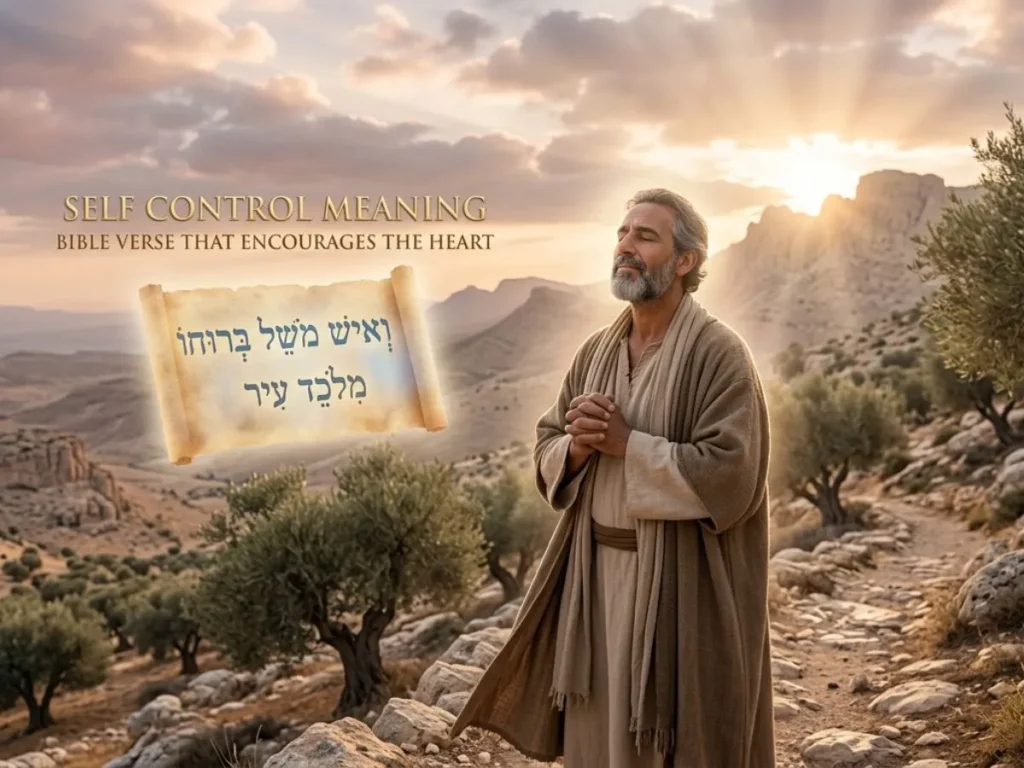
Many Christians hold tightly to verses about self-control during difficult seasons.
One comforting passage is found in 2 Timothy 1:7:
“For God has not given us a spirit of fear, but of power and love and self-discipline.”
This verse reminds believers that fear does not have to control their lives. God offers strength, clarity, and spiritual stability even during emotional storms.
Another powerful verse is:
“Like a city whose walls are broken through is a person who lacks self-control.” — Proverbs 25:28
These Scriptures are not meant to create guilt. They are invitations to grow spiritually and trust God more deeply each day.
Helping Children Understand Self Control in a Biblical Way
For kids, self-control can be explained simply as choosing what is right even when it feels difficult.
Children learn self-control when they share kindly, tell the truth, wait patiently, or obey with a good attitude. These small moments help build strong spiritual character.
Parents and teachers often use stories from Scripture to teach these lessons gently.
The story of Daniel is a beautiful example. Daniel remained faithful to God even when surrounded by pressure and temptation. His courage teaches children that God helps His people make wise choices.
Teaching self-control to kids should always be connected with grace. Children need encouragement, patience, and loving guidance as they grow.
The Spiritual Purpose Behind Self Control
There is a deeper reason self-control matters spiritually.
God is not trying to remove joy from life. He is shaping believers into people who reflect His peace, wisdom, and love.
Self-control protects the heart from destructive patterns. It strengthens relationships. It creates room for prayerful thinking instead of emotional reactions.
Sometimes God allows difficult situations because they reveal areas where spiritual growth is still needed. Those moments can become invitations for transformation rather than punishment.
Many believers notice that as self-control grows, so does inner peace. Anxiety loses some of its grip. Reactions become calmer. Faith becomes steadier.
This is part of spiritual maturity.
A Gentle Reflection on Faith and Spiritual Growth
Every Christian journey includes moments of weakness. Some days self-control feels natural. Other days it feels incredibly difficult.
That does not mean God has left you.
Spiritual growth usually happens slowly, often through ordinary moments. A patient response during conflict. A prayer whispered before reacting. A quiet decision to forgive instead of holding bitterness.
These moments matter deeply.
God works patiently within imperfect people. The Holy Spirit continues shaping hearts through grace, correction, and love. Even failures can become places where faith grows stronger.
When you ask God for wisdom and strength, He meets you with compassion. Over time, self-control becomes less about pressure and more about trust.
FAQs
Is self-control considered a fruit of the Spirit?
Yes. Galatians 5:22–23 lists self-control as one of the fruits of the Spirit, showing it grows through a relationship with God.
What is the difference between self-control and self-discipline?
Self-control usually refers to resisting impulses in the moment, while self-discipline involves consistent habits and spiritual commitment over time.
Why does God want believers to practice self-control?
Self-control protects the heart, strengthens faith, and helps believers respond with wisdom instead of harmful emotions or desires.
Can Christians ask God to help them with self-control?
Absolutely. Many believers pray for strength, patience, and wisdom when facing temptation, anger, fear, or unhealthy habits.
What Bible story best demonstrates self-control?
Jesus is the greatest example of self-control, especially during temptation and suffering. Joseph and Daniel also demonstrate powerful spiritual restraint.
Conclusion
The meaning of self control in the Bible is deeply connected to spiritual growth, wisdom, and trust in God.
It is not about becoming perfect or emotionless. It is about allowing God’s Spirit to guide your heart even during difficult moments.
As faith grows, self-control becomes a quiet source of peace and strength.
Through prayer, grace, and daily surrender, God gently shapes believers into people who reflect His love, patience, and wisdom.
Even small steps toward spiritual discipline can lead to lasting transformation and deeper closeness with Him.
Discover More Post
- What Does Divine Mean in the Bible: A Clear Biblical Explanation?
- What Is the True Josephine Meaning in the Bible(2026)?
- Why Is Tristan Name Meaning Spiritually Significant(2026)?